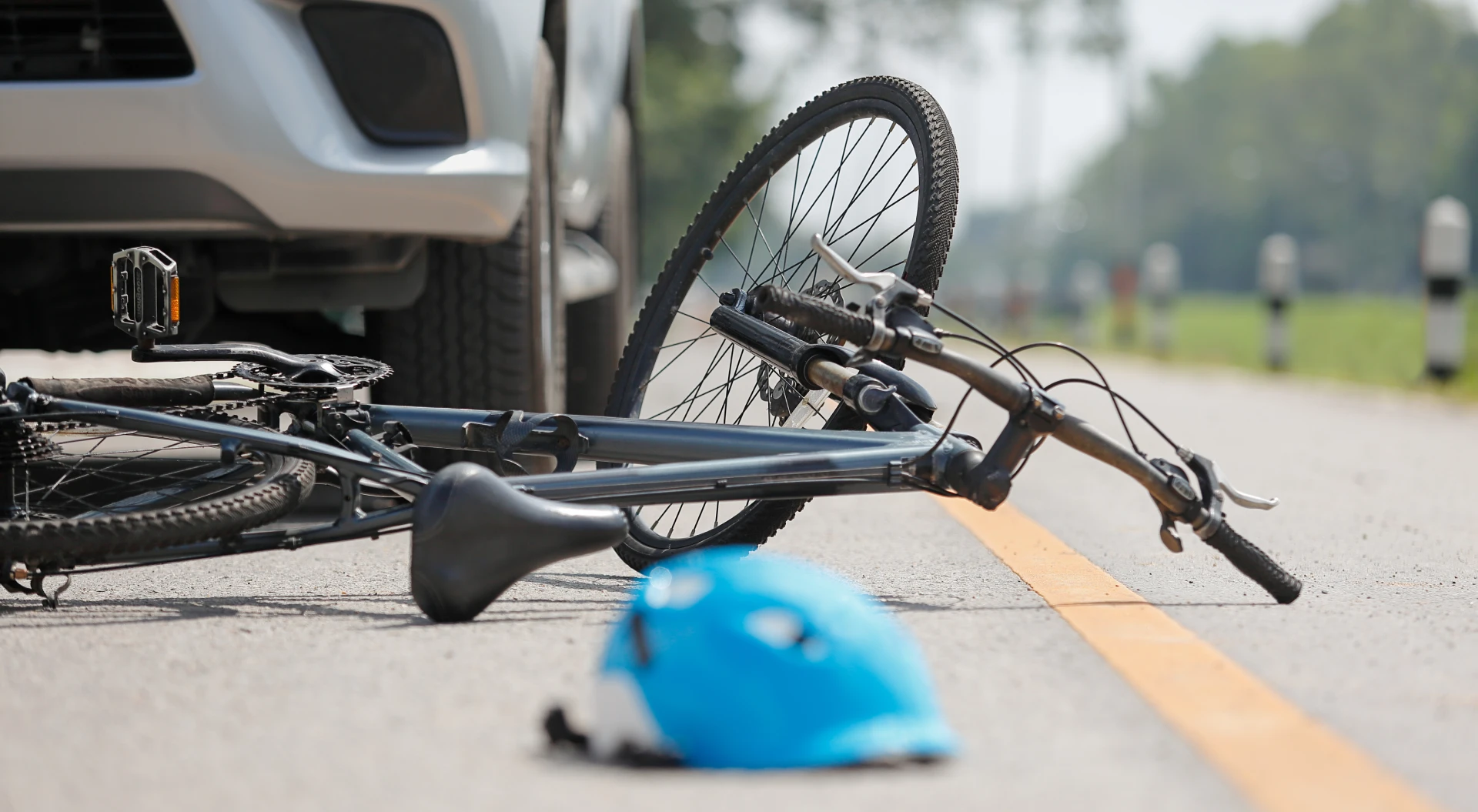
If you or someone you love is facing a bicycle accident catastrophic injury in Ontario, you’re likely fielding calls from an insurance adjuster before you have finished working out what happened. That call is the start of a process, not a courtesy. A cyclist has almost no protection in a collision with a car or truck, so the injuries are often life-altering, and the claim behind them is one of the most complex in personal injury law. Insurers know this. They have legal teams, medical experts, and a financial reason to classify your injury as something smaller than it is.
None of what follows replaces advice about your own file, so please consult a lawyer for your specific situation.
Why a Catastrophic Bicycle Accident Injury in Ontario Is Different
Cyclists are what the law calls vulnerable road users. There’s no frame, airbag, or seatbelt between you and the pavement, so even a low-speed collision can cause a traumatic brain injury, a spinal injury, multiple fractures, or a combination of all three. That injury profile is exactly why serious cyclist claims so often cross into catastrophic territory.
It also changes how these files are handled. Because the harm is severe and the costs run for a lifetime, the money at stake is significant, and insurers defend these claims hard. The difference between a recognized catastrophic claim and a denied one is almost always the quality and completeness of the evidence, not the severity of what you actually suffered. That’s the part injured cyclists rarely hear until it’s too late.
What Counts as a Catastrophic Impairment After a Bike Crash
Catastrophic impairment is a specific legal designation under Ontario’s Statutory Accident Benefits Schedule, or SABS, the no-fault rules that decide what benefits your auto insurer must pay. It isn’t a doctor calling your injury “devastating.” It’s a defined threshold that, once met, unlocks far higher benefit limits.
Common pathways to a catastrophic designation after a bicycle accident include a traumatic brain injury measured on recognized scales, a spinal cord injury causing paralysis, an amputation, loss of vision, or a whole person impairment of 55 percent or more. Physical impairments are rated using the AMA Guides, the American Medical Association’s manual for measuring permanent impairment, which assessors apply to score how much function you’ve lost.
The financial stakes are large. Non-catastrophic injuries are generally capped at $65,000 in medical and rehabilitation benefits, while a catastrophic designation can raise that limit to $1,000,000 over your lifetime. That gap is why insurers fight the designation so often.
Two Claims, Two Systems: Accident Benefits and the Tort Action
After a bike crash involving a motor vehicle, you usually have two separate claims running at once. Confusing the two is a common and expensive mistake. The first is your accident benefits claim under SABS. These benefits are paid regardless of who caused the crash, and they can cover medical treatment, rehabilitation, attendant care, and income replacement. Cyclists can access them even without their own auto policy, through a household member’s insurer or the automobile involved in the collision.
The second is a tort claim. Tort simply means a civil lawsuit against the at-fault driver to recover losses the no-fault benefits don’t fully cover, such as pain and suffering, lost future income, and the cost of future care. To claim pain and suffering, your injury must meet what’s called the threshold, a legal test requiring a permanent, serious impairment of an important physical, mental, or psychological function. Catastrophic bicycle injuries typically clear this bar, though our breakdown of the permanent serious impairment threshold test explains the nuances.
One more point on fault. Ontario uses contributory negligence, meaning if you’re found partly responsible, your compensation is reduced by your share rather than erased. Being in dark clothing or slightly outside a bike lane doesn’t end your claim.
How Insurers Fight Catastrophic Bicycle Claims
Once your file looks like it may become catastrophic, expect the insurer to push back. This isn’t personal, it’s a strategy to reduce what they pay, and knowing the tactics helps you protect yourself. A common move is to argue you contributed to the crash, saying you weren’t visible, ran a signal, or rode outside the lane.
Insurers also lean heavily on medical assessments they arrange. If you’re sent to an insurer’s examination, treat it seriously, because those reports are frequently used to argue your impairment falls short of the catastrophic threshold. Our guide to independent medical exams in Ontario injury claims explains what to expect before you walk in. Surveillance and social media monitoring are common too. A single photo of you smiling at a family event can be twisted to suggest you’ve recovered. When benefits are denied, the dispute often moves to the Licence Appeal Tribunal, or LAT, the body that resolves accident benefit disagreements.
The Evidence That Proves a Catastrophic Bicycle Injury Claim
Strong, organized evidence is what carries these claims. Gaps and delays are what insurers exploit. Four things need to be in the file.
What your medical records need to show
Emergency records, hospital charts, surgical notes, CT and MRI scans, and every specialist report. These document the injury and support the impairment rating under the AMA Guides.
What proves how the crash happened
The police report, witness names and statements, dashcam or nearby security footage, and photographs of the scene, your bicycle, and any helmet damage.
What proves what the injury cost you
Pay records, employer letters, tax returns, and receipts for out-of-pocket costs so income replacement and future care can be calculated.
Who else needs to weigh in
Reports from treating specialists, occupational therapists, and where needed, accident reconstruction and vocational experts who tie the injury to its lifelong impact.
If you want a printable version to work from, our catastrophic injury claim checklist for Ontario organizes this step by step, and our bike accident claim page covers how these cases proceed.
Deadlines You Cannot Afford to Miss
Ontario bicycle claims are deadline-driven, and missing one can quietly close a door. You should notify the auto insurer within seven days of the accident, or as soon as practicable, and submit the OCF-1 application within thirty days of receiving the benefits package. For a lawsuit against an at-fault driver, you generally have two years from the date of the crash, and written notice may be required much sooner. Because the accident benefits process runs alongside the benefits you can claim after a collision, starting early keeps both claims healthy. These timelines have exceptions, so confirm your own dates with a lawyer rather than assuming.
Frequently Asked Questions
What is considered a catastrophic injury in Ontario?
A catastrophic injury is a specific designation under Ontario’s SABS, not just a severe injury. It generally includes traumatic brain injury measured on recognized scales, spinal cord injury with paralysis, amputation, loss of vision, or a whole person impairment of 55 percent or more assessed using the AMA Guides. Meeting it unlocks much higher accident benefit limits.
Can a cyclist claim accident benefits in Ontario without auto insurance?
Yes. A cyclist injured in a collision with a motor vehicle can claim accident benefits even without their own auto policy. Coverage is drawn from a household member’s insurer, the insurer of the vehicle involved, or the Motor Vehicle Accident Claims Fund. These no-fault benefits are available regardless of who caused the crash.
Who is at fault when a cyclist is hit by a car in Ontario?
Fault is decided under the Highway Traffic Act and common law negligence, and drivers are held to a high standard of care around cyclists. When a cyclist is struck by a vehicle, there’s often a presumption that the driver is responsible unless they can show otherwise. A cyclist who was partly careless can still recover, with compensation reduced by their share of fault.
How much compensation can I get for a bicycle accident in Ontario?
Compensation depends on the severity and permanence of your injuries, your income loss, and your future care needs, so no honest figure fits every case. Catastrophic claims access up to $1,000,000 in lifetime medical and rehabilitation benefits, plus a separate tort claim for pain and suffering and lost earnings. Results vary and each case is different.
What is the deadline to file a bicycle accident claim in Ontario?
Notify the auto insurer within seven days of the accident, or as soon as practicable, and submit the OCF-1 application within thirty days of receiving it. A lawsuit against the at-fault driver generally must start within two years of the crash. Exceptions can apply, so confirm your specific deadlines with a lawyer quickly.
A catastrophic bicycle injury reshapes your life, and the claim behind it turns on evidence and deadlines rather than on how badly you were hurt. At Zayouna Law Firm we handle cyclists’ files from the first adjuster call through the tort action. We offer a No Fee Guarantee on personal injury matters, meaning you pay no legal fees unless we recover compensation for you. Schedule a Free Consultation to talk through your options.